Posts

Oral Argument: Carpenter v. United States: Audio, Transcript, Thoughts

Image
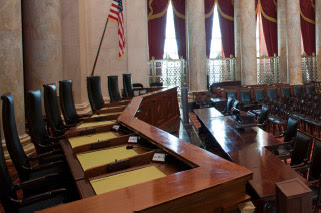
On November 29 the Supreme Court held oral argument in Carpenter v. United States , a major Fourth Amendment and cell phone/digital data case and the subject of my October 18th post. Two days later, audio of the entire argument was posted on the Oyez site, along with all the arguments of the week.  Like me, you can hear the argument here .  Aside from the audio being first-rate, which even picks up the laughter (and yes, there is laughter) in the courtroom, as each justice asks a question, their picture lights up, as if you were facing the bench from the counsel table. In addition, there is a running transcript that lets you follow along, identifying the speakers.  And you can stop and rewind.  Having been present for Supreme Court arguments, it's the next best thing to being there.  I can't recommend it highly enough: there is nothing like hearing a live appellate argument, especially at that level.  Total time is 1:2...

A Brief Note On Justiciability

Several of this blogs most faithful supporters suggested that I do a post on justiciability, having just referenced that concept in the last post about the emoluments cases.  It is both an abstract and a very real concept.  I'll try to focus on the real world application of the term, the one that will show up in legal memorandums and judicial opinions.  A word about legal terminology in general.  Legal terms are capable of being defined yet are constantly being interpreted.  They have a core meaning yet there is a fuzzy area surrounding them where the interpretations take hold.  Also, there are the exceptions to that core meaning which need to be understood to grasp the entire concept of that term, and also related terms that affect the meaning of the term itself.   For example, take the term "moot" or "mootness".  Legal actions cannot be brought or continued after a matter has been resolved, leaving no live case for a court to deal wi...

Emoluments: What They Are and What's At Stake

Image
Benjamin Franklin's snuff-box, a gift from King Louis XVI of France A recent subscriber to this blog asked me if I could do a post on emoluments and the litigation surrounding them.  Glad to oblige.  (And readers can make their own requests for topics by leaving suggestions in the "Comments" section). It is, to say the least, a big topic, and it's only getting started.  The Take Care blog alone had, as of November 9, 47 posts relating to it.  If you really want to dig into this issue, I'd suggest starting here.   A summary  posted on November 9 does a fine job of detailing the Congressional case, the issues raised and links to briefs.  (Spoiler alert: I think this is the strongest case, which is why I will focus on it in this post).  I'll try to summarize all of this in this post, along with a brief discussion of emoluments and the Constitutional provisions involved.  This is a longer than usual post, and there are l...

Masterpiece Cake Shop: Cakes, Compelled Speech, and Discrimination in Public Accomodations

Image
What is the most important case the Supreme Court will decide this term?  Working with just the cases already on the docket (there could easily be a really important case to come given the current legal climate) there are two: the gerrymandering case ( Gill v. Whitford, covered in my September 23 posting) and this case, Masterpiece Cakeshop, Ltd, v. Colorado Civil Rights Commission.  One of the things I have learned over the years following the Supreme Court (in fact, courts in general) is not to be too quick to judge (no pun intended): the case may look important, but the final outcome, reflected in the opinion(s), may make it less so.  But Gill   could end gerrymandering as we know it.  Or maybe not.  But  Masterpiece is a landmark case any way you look at it.  As blogger and lawyer Joshua Matz put it,  "It's hard to overstate the importance of this case.  If the Supreme Court accepts the baker's free ...

No Voting For You: Ohio, Voter Rolls, and But-for Causation

This will be a short post on the case itself, but will also introduce you to one of the law's more difficult concepts: causation.  But once you get some idea of causation, this case, and many others, might be a bit more understandable.  Challenging, but worth it.  First, the case (the "Plus One" of my 'Big Seven Plus One" Supreme Court cases). November 8 : Husted v. A. Philip Randolph Institute Ohio has a voter list-maintenance process, through which you are sent a notice if you have not voted for two years.  The notice asks you to confirm your eligibility to vote.  If you fail to respond over the next four years, you are taken off the rolls: your voter registration is canceled.   There are two federal statutes involved here.  The National Voter Registration Act (NVRA) prohibits any state from implementing any program that would " result " in the removal of a person from the voter rolls "by reason of a person's ...

Cell Phones and Emails: Big Case, Big Grant, Big Issues

The Supreme Court has entered the digital age.  Starting on November 13, 2017, filings with the Court will be both the traditional paper and electronic , which means if I have a case there, I will have to file both ways (I've already registered for electronic filing) and you will be able to see the filings in any case after that date, so you too can follow along and read briefs and other papers.   But the Court also has to confront the legal issues that come with the digital age, and they now have before them two cases (one set for argument and one just granted yesterday) that are at the intersection of digital technology and the 4th Amendment  (search and seizure).  And these aren't esoteric cases.  They concern two technologies that you use every day: your cell phone and email.  Believe me when I tell you, you will want to   pay atten tion to these.  This post is a bit long, s o grab a beverage.  November 29 : C...

Place Your Bets (Maybe)

In this post, I'll talk about an interesting case that won't be argued till December 4.  I know it's out of order, but it  is college football season.🏈 December 4 :  Christie v. NCAA ;  NJ Thoroughbred Horsemen's Assn. v. NCAA  (consolidated) Let's say you are in New Jersey and want to place a bet on a college football game or a horse race.  Sadly for you, a federal statute prohibits states from authorizing or licensing sports betting.  (Las Vegas is, of course, the exception).  And New Jersey could have been an exception too; the statute gave New Jersey a year to authorize and regulate sports betting at its Atlantic City casinos.  New Jersey missed the one-year deadline but passed the law anyway. The Third Circuit invalidated the law but said New Jersey could repeal the ban on betting in whole or in part without violating federal law.  New Jersey repealed the law in part, but allowed gambling on-site, by people a...